Wastewater systems are something most people rarely think about until a problem appears. In many residential and commercial buildings, especially those with plumbing fixtures located below the main sewer line, specialized pumps are needed to move wastewater out of the building.
When property owners begin researching pump options, one question quickly comes up. What is the difference between a grinder pump and a sewage ejector pump? Understanding the grinder vs ejector pump comparison is important because choosing the wrong system can lead to performance issues, maintenance headaches, and costly repairs later on.
Both pumps serve the purpose of moving wastewater, yet they operate differently and are designed for different environments. For property owners and building managers across New York, selecting the correct pump depends on several factors such as plumbing layout, building size, and wastewater flow.
Learning the key grinder pump difference and understanding various sewage pump types can help you determine which sewage pump best suits your building’s needs.
Understanding Sewage Pump Types and Why Buildings Require Wastewater Pump Systems
Before comparing pumps, it helps to understand why these systems exist in the first place. In many buildings, some plumbing fixtures sit below the level of the main sewer line. Gravity alone cannot move wastewater upward into the sewer system.
This is where specialized pumps become essential. Among the most common sewage pump types are grinder pumps and sewage ejector pumps — property owners often also compare sewage ejector vs sump pump systems when deciding how to handle wastewater below the main sewer line.”
However, the grinder pump difference lies in how the wastewater is handled before it leaves the basin. Grinder pumps are designed to grind solid waste into fine particles before pumping it through the pipe. Sewage ejector pumps move wastewater without grinding the solids.
Understanding the grinder vs ejector pump comparison helps property owners avoid selecting the wrong system for their plumbing design.
Some buildings may also include warning systems such as a sewage pump alarm, which alerts property managers if the basin water level rises too high. This alarm acts as an early warning sign that something in the pump system needs attention.
Breaking Down the Grinder Pump Difference and How Grinder Systems Handle Waste
A grinder pump is designed to break down solid waste before pumping it into the sewer line. Inside the pump housing is a grinding mechanism that cuts waste into small particles, similar to how a kitchen garbage disposal works.
This grinding action is the primary grinder pump difference that separates it from other sewage pump types. Because the waste is pulverized, grinder pumps can push wastewater through smaller pipes and over longer distances. This makes them useful in properties where the sewer connection is far from the building or where narrow discharge pipes are required.
When evaluating the grinder vs ejector pump comparison, grinder pumps are often chosen for properties located far from municipal sewer connections or in areas where wastewater must travel uphill. These systems are powerful and reliable but they also require proper maintenance.
Professional technicians often recommend routine inspections and periodic grinder pump service to ensure the cutting mechanism and motor remain in good condition.
How Sewage Ejector Pumps Work and When They Are the Better Choice
Sewage ejector pumps operate differently. Instead of grinding waste, they simply move wastewater and solid materials directly from the basin to the sewer line. In many residential and commercial buildings, this design works perfectly because the discharge pipe is large enough to handle solid waste without needing a grinding mechanism.
When evaluating the grinder vs ejector pump decision, ejector pumps are typically used in homes or buildings where the sewer line is relatively close and the discharge path is short. One advantage of ejector pumps is that they often have fewer moving components compared to grinder pumps. This can make them easier to maintain in certain situations.
However, even ejector systems are not immune to problems. Many buildings rely on a sewage pump alarm to alert maintenance teams if the pump fails to activate or if wastewater levels rise too high. Understanding the differences between these sewage pump types helps property owners determine which sewage pump is best suited for their plumbing infrastructure.
Choosing Which Sewage Pump Is Right for Your Property and Plumbing Layout
Selecting the correct system requires evaluating the building’s plumbing design and wastewater demands. Not every property requires the same solution. When comparing grinder vs ejector pump options, several factors influence the decision. These include the distance wastewater must travel, pipe diameter, building size, and the amount of wastewater generated each day.
Grinder pumps are typically better for properties where wastewater must travel long distances or through narrow piping. The grinding mechanism ensures solids will not clog the pipe during transport. Sewage ejector pumps, on the other hand, are ideal for many residential and small commercial buildings where the sewer connection is nearby and piping allows solid waste to pass freely.
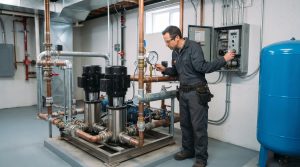
Experienced technicians also examine overall pump system configurations when determining the best solution. Some buildings require duplex pump systems for higher capacity, while others operate effectively with a single pump setup. Proper evaluation of pump system configurations ensures the chosen pump can handle the building’s wastewater demand without unnecessary strain.
Why Maintenance and Professional Service Are Essential for Long Term Pump Performance
Regardless of which pump system a building uses, regular maintenance plays a critical role in long term reliability. Both grinder pumps and ejector pumps operate in demanding conditions and handle wastewater continuously. Routine inspections help identify early warning signs before major issues develop.
Technicians inspect pump motors, float switches, discharge lines, and electrical controls to confirm the system operates efficiently. Buildings equipped with a sewage pump alarm should also ensure the alarm system is functioning properly. This alarm serves as a safety feature that alerts building managers if the wastewater level rises unexpectedly.
For grinder systems in particular, professional grinder pump service helps maintain the grinding mechanism and prevents buildup that could affect performance. Ignoring maintenance can lead to unexpected failures that disrupt plumbing systems and create costly repairs.
Understanding The Grinder Vs Ejector Pump Choice for Reliable Wastewater Management
Choosing between a grinder pump and a sewage ejector pump is not always a simple decision. Each system serves a specific purpose and performs best in the right environment. The key to making the correct choice lies in understanding the grinder vs ejector pump comparison and recognizing the important grinder pump difference between these systems.
Grinder pumps provide powerful waste grinding and are often used when wastewater must travel long distances or through narrow piping. Sewage ejector pumps remain one of the most widely used sewage pump types because they provide reliable wastewater removal in buildings where piping allows solid waste to pass freely.
For property owners trying to determine which sewage pump fits their needs, professional guidance can make a major difference. Experienced technicians evaluate building layouts, wastewater demand, and existing pump system configurations to recommend the best solution.
With the right system and regular maintenance such as professional grinder pump service, wastewater systems can operate safely and efficiently for many years. Proper planning today helps prevent plumbing problems tomorrow and keeps buildings running smoothly.