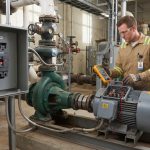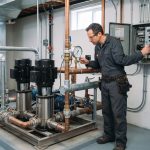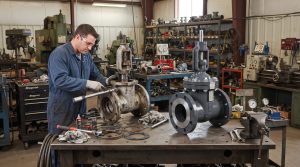
You flip the switch, hit the start button, or maybe your system tries to kick on automatically, and then it happens. A loud click, the lights in the mechanical room flicker for a split second, and everything goes dark. Your breaker has tripped, and your pump is dead silent. If you are reading this, your heart probably sank the moment that happened because you know exactly what it means.
Something is wrong, and it is serious enough that your electrical system is refusing to let that pump run. I have been in that mechanical room with countless building owners, facility managers, and plant operators across NYC, and I know that feeling all too well. That moment of frustration mixed with worry about how long the downtime will last and what the repair is going to cost.
As the team recognized throughout NYC and NY as the #1 pump repair company, we have seen every version of this problem you can imagine. But here is the thing, when your pump trips breaker immediately, your equipment is actually giving you a gift. It is stopping you from making a bad situation much worse.
Let me walk you through why this happens and how to figure out what is really going on.
When Your Pump Trips Breaker: Why Instant Trips Mean Serious Trouble
There is a big difference between a breaker that trips after a pump has been running for a while and one that trips the nanosecond you try to start it. If your pump trips breaker instantly, we are not dealing with a slow overload or a gradual problem. We are dealing with something abrupt and severe.
A breaker is designed to protect your equipment and your building from electrical faults that could cause fires or catastrophic damage. When that breaker trips immediately, it is detecting a massive electrical imbalance that it simply will not tolerate. I like to explain it to my customers this way, imagine trying to drink a thick milkshake through a tiny straw.
If the straw gets completely clogged, no matter how hard you suck, nothing comes through. Your breaker is doing the same thing. It is sensing that too much current is trying to flow or that electricity is going somewhere it should not go. This is where understanding electrical pump problems becomes essential.
You cannot just keep resetting the breaker and hoping for the best. That is how small issues turn into full blown motor replacements. When a breaker trips pump systems repeatedly, you need to stop, take a breath, and start investigating the root cause before you cause permanent damage.
Why Your Pump Trips Breaker Instantly from These Common Culprits
Let me tell you about the two biggest culprits when a pump trips breaker instantly. The first is a ground fault, and the second is a short circuit. I know those terms sound technical, but they are actually pretty simple to understand. A ground fault happens when electricity finds an unintended path to the ground.
In a pump motor, this usually means the insulation inside the motor windings has broken down. Maybe the motor got wet, maybe it is just old and worn out, but now electricity is leaking directly to the housing of the motor. The breaker senses that leak and says absolutely not.
A short circuit is similar but involves the hot wires touching each other or touching neutral directly. Both of these create a massive surge of current that trips the breaker instantly. I have walked into basements across Brooklyn and Queens where facility managers told me they reset the breaker three or four times before calling us. By the time we arrived, the motor was beyond saving.
When your pump trips breaker, do not treat it like a nuisance that will go away on its own. Treat it like the warning sign it is. You might be dealing with moisture intrusion from a leaking seal, or you might have a motor that has simply reached the end of its life. Either way, ignoring it will cost you more in the long run.
Is Your Motor Seized? How a stuck Pump Can Cause a Breaker to Trip?
Here is a scenario I run into constantly. A customer calls me and says, “The pump was working fine yesterday, and now it trips the breaker every time I try to start it.” When I ask if they heard anything unusual before it stopped, they often mention a loud hum or a grinding noise.
That is the sound of a motor trying desperately to turn a pump that is physically stuck. If your motor won’t start because the pump itself is seized, the motor will draw what we call locked rotor current. That is the maximum amount of current the motor can possibly draw, and it is usually six to eight times higher than the normal running current.
A breaker cannot handle that for more than a fraction of a second. So when you hear that hum and then the breaker trips, you are likely dealing with a mechanical bind. This could be a bearing that has rusted solid because the pump sat idle for too long. It could be a foreign object like a stone or piece of debris jammed into the impeller.
It could even be a seal that failed, allowing water to enter the bearing housing and cause corrosion. When your motor won’t start and the breaker trips immediately, you need to isolate the problem. Disconnect the motor from the pump if possible. If the motor runs freely on its own without tripping the breaker, you have confirmed the pump itself is the problem. If the motor still trips the breaker when disconnected, you are looking at an internal motor issue.
Why Motor Overheating and Breaker Trips Go Hand in Hand
I want to clear up a common point of confusion because it comes up all the time. People often confuse a breaker trip with a thermal overload trip. They are related but they are not the same thing. A breaker protects your wiring and your building from electrical faults.
A thermal overload protects your motor from burning itself up. However, when you have motor overheating issues that go unaddressed, that overheating can eventually lead to insulation breakdown, which then causes the ground fault that makes your pump trips breaker.
So if you have been noticing that your motor feels extremely hot to the touch or if you have had to manually reset thermal overloads in the past, you have been getting warning signs. Motor overheating is often caused by a pump that is running too hard, maybe because of a clogged strainer, a closed valve, or an impeller that is worn out and forcing the motor to work overtime.
Sometimes it is poor ventilation around the motor itself. I have seen motors packed into tight mechanical closets with no airflow, running hot day after day until finally the insulation fails and the breaker starts tripping. When you call us for electrical pump service, this is one of the first things we look for.
The history of motor overheating tells us whether this is a sudden failure or a long term problem that finally reached its breaking point.
Single Vs Three Phase: How Your Pump’s Power Supply Affects Breaker Trips
This is a detail that separates the pros from the amateurs. If you are dealing with a commercial or industrial facility, your pump likely runs on three phase power. But sometimes, especially in smaller buildings or residential applications, you have a single phase pump.
Understanding the difference between single vs three phase is critical when you are troubleshooting why your pump trips breaker. In a three phase system, if you lose one leg of power, the motor will try to run on the remaining two phases. It will hum, struggle, draw excessive current, and eventually trip the breaker or burn up.
I cannot tell you how many times I have arrived at a job where the customer swore the motor was dead, only to find that a blown fuse or a loose connection in the disconnect meant only two phases were getting to the motor. With single vs three phase systems, the troubleshooting path looks different.
A single phase motor often has a capacitor that can fail and cause the motor to draw high current on startup. If that capacitor is bad, your pump trips breaker every time it tries to start. Knowing whether you are dealing with single vs three phase helps you narrow down the possibilities. It affects what you check first, whether you look at capacitors or contactors, and ultimately how quickly you can get the system back online.
When To Call for Electrical Pump Service
You have read this far, and hopefully you have a better idea of what might be happening inside your pump system. But I know what you are really wondering. Should I keep trying to figure this out myself, or do I need to call in the pros? Here is my honest advice.
If your pump trips breaker immediately and you have already tried resetting it once or twice, stop. Do not keep resetting it. Every time you do that, you are sending a massive surge of current through components that are already stressed. You might be turning a repairable motor into a paperweight.
There are a few things you can safely check. You can verify that the disconnect switch is fully on. You can check for obvious signs of water intrusion around the motor. You can make sure the pump itself is not physically jammed if you have the tools to safely isolate it.
But if those quick checks do not reveal an obvious and simple fix, it is time to call for professional electrical pump service. As the leading experts in pump repair across NYC, NY, NJ, and PA, we have the tools and experience to diagnose exactly why your pump trips breaker.
We can test motor windings for ground faults, check phase balances, inspect VFDs, and determine whether the problem is electrical or mechanical. Our dedicated team ensures dependable and efficient solutions while maintaining the highest standards in the industry for pump repair in NY.
Turning Breaker Trips from a Headache into a Solution
Look, I know that dealing with a pump that keeps tripping its breaker is not how you wanted to spend your day. You have a building to run, a facility to manage, and a million other things demanding your attention. The last thing you need is to be standing in a mechanical room, staring at a breaker panel, wondering why your equipment has decided to give up on you.
But here is what I want you to take away from this. When your pump trips breaker, your equipment is not betraying you. It is protecting you. It is preventing a small electrical fault from becoming a fire, or a seized pump from burning up a motor. That breaker is on your side.
Now that you understand the difference between ground faults, seized pumps, motor overheating, and the nuances of single vs three phase systems, you are equipped to have an intelligent conversation with whoever helps you fix it. You know what to look for and what questions to ask. And when you need the best in the business, you know where to turn.
We are recognized throughout NYC and NY as the #1 pump repair company, and we serve and operate in NY, NJ, and PA. Do not let a tripping breaker ruin your week. Let us help you get back to the sound of a pump running smoothly, the way it should be.