When a pump system fails or struggles to perform, the issue often goes deeper than just wear and tear. The type of motor powering your pump plays a huge role in how efficiently everything runs. Whether you are managing a commercial building or handling industrial operations, understanding the difference between motor types is not just technical knowledge.
It directly impacts performance, cost, and reliability.
Many people hear the terms single phase vs three phase motor and assume it is just an electrical detail. In reality, it affects everything from energy consumption to how often you deal with breakdowns like pump motor overheating. Choosing the wrong motor can lead to frequent repairs, higher utility bills, and unnecessary downtime.
This guide breaks things down in a clear and practical way. You will learn how each motor works, where they perform best, and how to make the right decision for your setup without second guessing.
Understanding Pump Motor Types and Why the Right Choice Matters More Than You Think
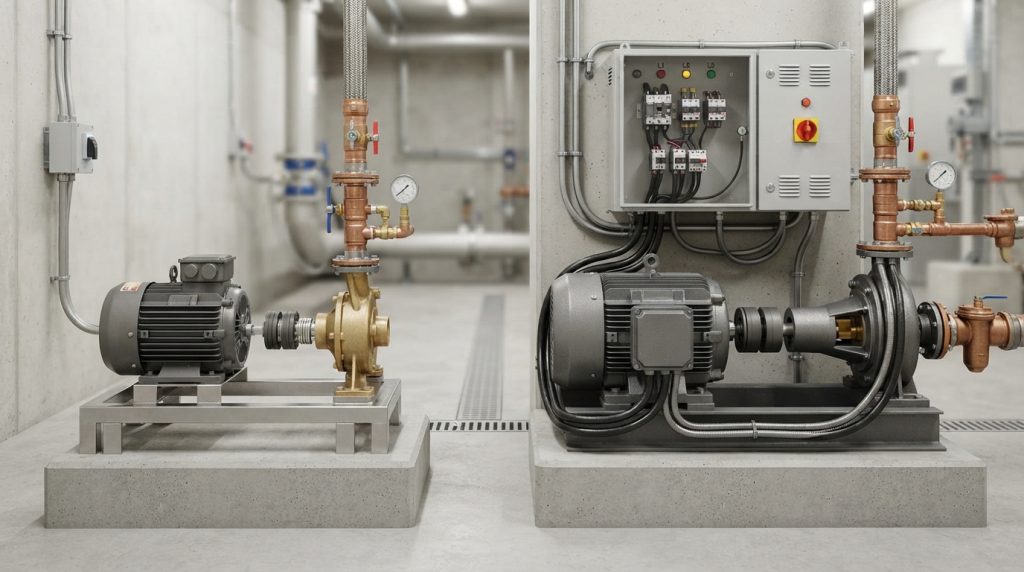
Not all pump systems are built the same, and neither are the motors behind them. When we talk about pump motor types, we are mainly referring to single phase and three phase motors. Both serve the same purpose but operate very differently.
A single phase motor typically runs on standard electrical supply, which makes it common in smaller buildings or residential setups. It is simple, accessible, and easier to install. On the other hand, three phase motors are designed for larger loads and more demanding environments. They rely on a more complex power supply that delivers consistent energy flow.
What this really means is that your motor choice determines how smoothly your pump runs under pressure. A mismatched motor can struggle to keep up, leading to inefficiencies and even long term damage. This is where routine pump motor service becomes critical, especially if your system was not originally optimized for the workload.
Breaking Down The 1 Phase 3 Phase Difference in a Way That Actually Makes Sense
The technical explanation of the 1 phase 3 phase difference can get complicated quickly, but it does not have to be. A single phase motor uses one alternating current. This creates a pulsing power delivery, which means the motor does not run as smoothly as you might expect.
It starts slower and can struggle under heavy loads. A three phase motor uses three separate electrical currents. These currents work together to create a continuous and balanced power flow. The result is a motor that runs smoother, starts faster, and handles demanding tasks with ease.
Think of it like pushing a heavy object. With a single phase motor, it is like pushing with one hand. With a three phase motor, it is like using both hands and your full body weight. The effort is more balanced and efficient. This difference becomes especially noticeable in large scale operations where downtime is costly.
It also explains why issues like pump motor overheating are more common in systems that are underpowered or incorrectly configured.
A Practical Motor Phase Comparison for Performance, Efficiency, And Reliability
When you look at a real world motor phase comparison, the differences become even clearer.
Single phase motors are ideal for lighter applications. They are cost effective upfront and easier to install. However, they tend to wear out faster when pushed beyond their limits. You may also notice more frequent maintenance needs over time.
Three phase motors, on the other hand, are built for endurance. They are commonly used in commercial and industrial settings because they deliver consistent power and better efficiency. Many of today’s high efficiency motors fall into this category, helping businesses reduce energy costs while maintaining performance.
Reliability is another key factor. Three phase motors are less prone to vibration and mechanical stress, which means fewer breakdowns. This can significantly reduce the need for emergency repairs and extend the lifespan of your equipment.
So while the initial investment may be higher, the long term savings and performance benefits often make three phase motors the smarter choice for larger operations.
How Motor Choice Affects Energy Use, Lifespan, And Long-Term Costs
Choosing between a single phase vs three phase motor is not just about performance. It directly impacts your operating costs. Single phase motors tend to consume more energy relative to the work they perform, especially under heavy loads. This inefficiency adds up over time, increasing your electricity bills and putting extra strain on the system.
Three phase motors are designed to be more energy efficient. They convert electrical energy into mechanical power more effectively, which means less waste and lower operating costs. This is why many businesses are shifting toward high efficiency motors to improve sustainability and reduce expenses.
Lifespan is another major consideration. Motors that operate under constant stress are more likely to fail prematurely. If your system frequently deals with issues like pump motor overheating, it may be a sign that the motor is not suited for the job.
In such cases, it is important to evaluate whether a rebuild vs replace motor decision makes more sense. Sometimes upgrading to a more suitable motor type can save you from ongoing repair costs and unexpected downtime.
Common Mistakes People Make When Choosing Between Motor Types
One of the biggest mistakes is choosing a motor based solely on initial cost. While a single phase motor may seem like the cheaper option, it can lead to higher maintenance and energy expenses in the long run. Another common issue is underestimating the workload.
A motor that works fine under light conditions may struggle when demand increases. This often leads to performance issues and frequent service calls. Ignoring regular pump motor service is another problem. Even the best motor will fail if it is not properly maintained. Routine inspections help identify early signs of wear and prevent costly breakdowns.
Finally, many people overlook the importance of professional guidance. Pump systems are complex, and choosing the wrong motor can create a chain reaction of issues. Working with experienced technicians ensures that your system is properly matched to your needs.
When To Upgrade and How to Make the Right Decision for Your System
Knowing when to upgrade your motor can save you time, money, and frustration. If your current system struggles to keep up, requires frequent repairs, or shows signs of inefficiency, it may be time to reconsider your setup. Start by evaluating your current performance.
Are you dealing with repeated issues like pump motor overheating or inconsistent output? Are your energy costs higher than expected? If the answer is yes, it is worth exploring whether a different motor type could improve your system. A detailed motor phase comparison can help you understand the potential benefits of switching to a three phase motor.
You should also consider the long term value. While the upfront cost of upgrading may seem high, the improved efficiency and reliability often justify the investment. In some cases, a rebuild vs replace motor decision will depend on the condition of your existing equipment.
If the motor is still in good shape, a rebuild may be sufficient. If not, replacing it with a more suitable option can provide better results.
Choosing The Right Motor Today Can Save You from Bigger Problems Tomorrow
The choice between a single phase vs three phase motor is more than just a technical decision. It is a strategic one that affects your entire pump system. From performance and efficiency to maintenance and long term costs, the right motor makes all the difference.
Single phase motors have their place in smaller applications where simplicity and accessibility matter. Three phase motors, however, stand out in demanding environments where reliability and efficiency are critical. If your system is struggling or not performing as expected, it may be time to take a closer look at your motor.
Addressing issues early, investing in proper pump motor service, and considering upgrades, when necessary, can prevent bigger problems down the line. With the right approach and expert support, you can ensure your pump system runs smoothly, efficiently, and reliably for years to come.