In any large building or industrial facility, pumps are the silent heroes that keep water moving, pressure steady, and operations running smoothly. But when multiple pumps are installed, simply turning them on and off manually is not an option. That’s where lead lag pump control comes into play. This system ensures that pumps operate efficiently, share workload, and prevent unnecessary wear, all without constant human intervention.
For facility managers and engineers, understanding lead lag pump control is essential. It allows seamless operation of duplex pump systems and even more complex setups like triplex pump operation, providing both reliability and backup protection. With the right setup, buildings can maintain steady pressure and reduce the risk of system failures.
This guide dives into the mechanics of lead lag pump control, explains how pump alternation control works, and highlights why proper maintenance of the pump control panel service is critical for long-term reliability.
How a Lead Lag Pump Control System Optimizes Efficiency in Buildings?
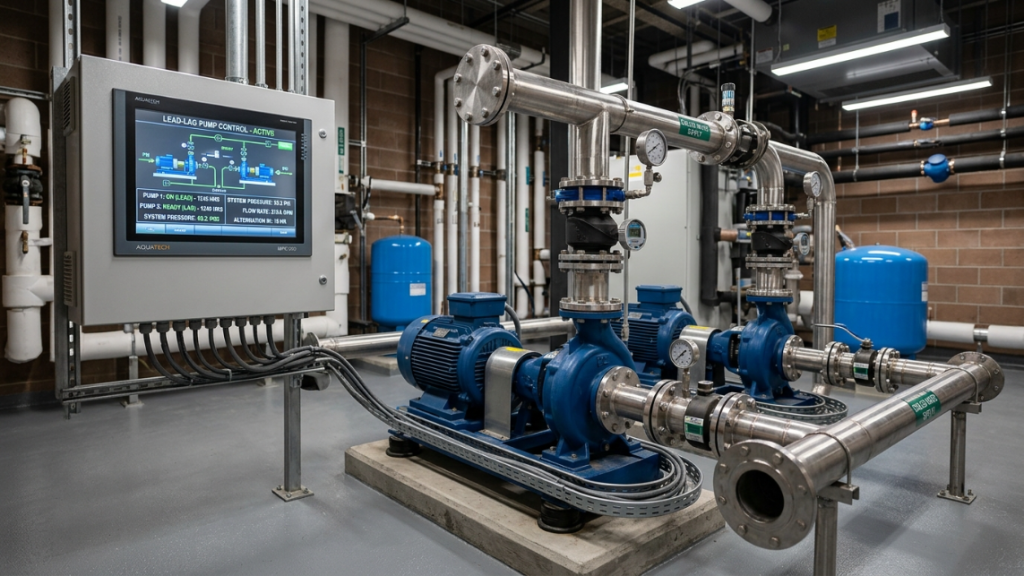
- In a duplex pump control setup, the lead pump operates first while the lag pump stands by. When demand increases, the system automatically switches roles — ensuring both pumps log equal operating hours over time.
- This rotation prevents one pump from wearing out ahead of the other, extends equipment lifespan, and reduces energy consumption. Facility managers pair it with pressure and flow sensors to keep the system fully automated.
A properly programmed lead lag pump control also minimizes human error. Without it, pumps could run continuously or fail to switch when needed, potentially causing pressure drops or operational disruptions. For larger setups, including triplex pump operation, this control system becomes even more critical because it balances multiple pumps while maintaining constant performance across the building.
Key Components of Pump Alternation Control in Modern Pump Systems
The efficiency of a lead lag pump control system is heavily reliant on pump alternation control. This mechanism determines which pump takes the lead, which pump runs second, and in larger systems, which pump acts as backup.
- Pump alternation control relies on sensors, timers, and electrical relays that monitor demand continuously. When pressure drops below a preset level the lead pump starts; when that pump hits its runtime limit or more capacity is needed, the lag pump activates automatically.
- In duplex pump systems alternation keeps wear balanced between both units. In triplex configurations it becomes more complex — three pumps sharing load sequentially — which is why engineers integrate this directly with the pump control panel basics for unified monitoring throughout the day.
Understanding Duplex Pump Control and Its Advantages Over Single Pump Systems
- A duplex pump control system runs two pumps in tandem with built-in backup. Unlike a single pump setup, if one unit requires maintenance or fails unexpectedly, the other keeps service running without interruption.
- The control logic decides which pump leads and which stays on standby. Advanced lead lag pump control systems also track individual pump runtime, ensuring alternating use that reduces wear and cuts energy costs over the long term.
This approach provides a clear advantage over single pump systems, especially in commercial and industrial buildings where downtime can be costly. Pairing duplex pump control with routine pump control panel service further enhances system reliability, making it easier to maintain consistent water pressure without frequent human intervention.
How Automatic Pump Switching Enhances Reliability in Complex Systems
Automatic pump switching is a key feature of modern lead lag pump control. It allows pumps to respond immediately to changes in demand without requiring manual operation. When water pressure drops or system flow increases, the control system automatically engages additional pumps, ensuring smooth and uninterrupted service.
- In larger facilities, automatic pump switching is essential for managing triplex pump operation — the system assigns lead, second, and backup roles across three pumps, adding an extra layer of pump redundancy that keeps critical service protected.
- This automation cuts energy consumption by running pumps only when needed. Buildings requiring uninterrupted water service — hospitals, high-rise apartments — benefit most from automatic pump switching fully integrated with lead lag pump control.
The Role of The Pump Control Panel Basics In Maintaining System Performance
The pump control panel basics form the brain of any lead lag pump control system. This panel receives signals from sensors, manages alternation, and ensures pumps operate according to demand.
- A typical control panel includes motor starters, relays, timers, and display modules that provide real-time operational feedback. Understanding pump control panel basics lets facility managers monitor pump status, track runtime, and catch potential issues before they escalate.
- Regular pump control panel service keeps all components functioning correctly, firmware current, and demand response accurate. A poorly maintained panel causes improper sequencing, excessive wear, and inefficient operation — even in sophisticated duplex pump systems.
Best Practices for Maintaining a Lead Lag Pump Control System
- Routine checks should include testing the alternation sequence, verifying automatic pump switching functionality, and inspecting all electrical connections inside the pump control panel.
- For facilities running triplex pump operation, maintenance is even more critical given the complexity of three simultaneous pump sequences. Scheduled pump control panel service prevents unexpected failures, minimizes downtime, and extends the lifespan of every pump in the system.
Additionally, tracking runtime and performance metrics helps engineers make informed decisions about load balancing and efficiency improvements. Facilities that implement these best practices often see reduced energy costs, improved system reliability, and longer equipment lifespan.
Why Proper Lead Lag Pump Control Ensures Reliable Building Operations
A lead lag pump control system is more than just a mechanism for alternating pumps. It is a vital part of ensuring reliable, efficient, and continuous water service in commercial and industrial buildings. By combining pump alternation control, duplex pump control, and automatic pump switching, facility managers can maintain balanced pump operation, prevent equipment wear, and minimize the risk of downtime.
- Understanding the pump control panel basics and investing in regular pump control panel service ensures smooth long-term operation — whether managing duplex pump systems or complex triplex pump operation, a well-designed lead lag pump control setup delivers dependable performance every day.
- This knowledge empowers property owners and engineers to optimize pump performance, extend equipment life, and confidently meet the water system demands of any modern commercial or industrial building.