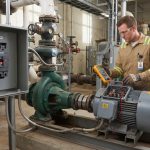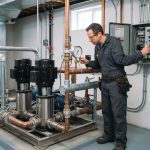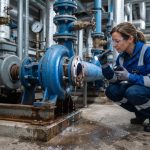
In commercial and industrial settings, a building’s water system often goes unnoticed, until it fails. The simplex pump system is a foundational setup that many property managers encounter first. Designed around a single pump, it delivers reliable water flow and pressure control with minimal complexity. This guide will explain how a simplex pump system functions, highlight its practical applications, and provide insight into when it’s the right solution for your facility.
If you manage property in New York City, you know that reliable water pressure isn’t optional—it’s essential. From Manhattan high-rises to Brooklyn warehouses, every building depends on pump systems that work quietly behind the scenes.
When you’re evaluating pump options for your facility, understanding what a simplex pump system offers can save you thousands in upfront costs while delivering exactly the performance your building needs.
This comprehensive guide walks you through everything NYC property managers need to know about single pump configurations, from how they work to when they make the most sense for your building.
What Exactly Is a Simplex Pump Setup?
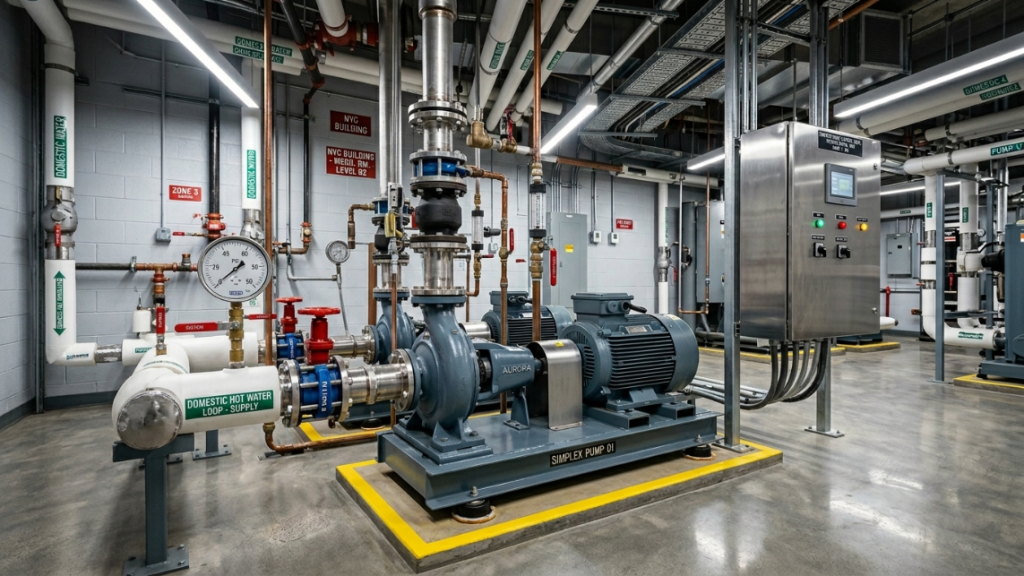
At its core, a simplex system uses one pump to manage your building’s water flow and maintain consistent pressure.
Think of it as the workhorse that activates automatically when pressure drops or flow demands increase, then shuts down once the system stabilizes.
How Single Pump Configurations Work
Most NYC installations rely on either pressure sensors or float switches to trigger operation.
The beauty of this single pump configuration lies in its straightforward design:
- Fewer components mean fewer things that can go wrong
- Less complexity translates to lower maintenance overhead
- Simplified troubleshooting when issues arise
- Easier staff training for building maintenance teams
Common NYC Applications
You’ll find these systems handling critical tasks across the city:
- Sump and wastewater removal in basement mechanical rooms
- Water booster applications in small to mid-sized commercial properties
- Rooftop tank refilling systems in older NYC buildings
- Light industrial facilities with predictable water demands
- Retail and office spaces throughout the five boroughs
The system operates only when needed, which conserves energy and reduces wear on components.
For many NYC properties, especially those with moderate, consistent water requirements, this simplicity delivers exactly what’s needed without overcomplicating the infrastructure.
Understanding When to Use Simplex Systems in NYC Buildings
Choosing the right pump setup for your property starts with honestly assessing your water demand patterns and operational priorities.
Simplex systems excel in specific scenarios that are common throughout New York City.
Ideal NYC Applications
Small to medium commercial buildings benefit from the cost-effectiveness of a single pump approach:
- Retail spaces in Queens
- Office buildings in Lower Manhattan
- Restaurant facilities across the boroughs
- Professional services buildings
- Boutique hotels and smaller properties
If your water demand stays relatively consistent throughout the day and occasional brief downtime won’t disrupt operations, you’re looking at a perfect fit.
Seasonal and Temporary Projects
Seasonal or temporary projects also make excellent candidates:
- Construction sites requiring temporary water pressure
- Buildings undergoing renovation
- Pop-up retail or seasonal businesses
- Temporary facilities and installations
Budget-Friendly Solutions
Budget-conscious property owners find these systems particularly attractive.
When you’re working with limited capital or managing properties where pump installation costs need careful control, starting with a simplex configuration makes financial sense.
Key Advantages
The installation process offers multiple benefits:
- Less electrical work required
- Simpler piping layouts
- Fewer components to purchase
- Reduced installation timeline
- Lower labor costs
Maintenance becomes more straightforward; you’re servicing one pump instead of coordinating alternating units.
Energy efficiency improves because the pump only runs when your building actually needs it, which matters when you’re paying New York City electricity rates.
Simplex vs Duplex Pump Systems: Making the Right Choice
One question comes up constantly in NYC property management circles: should you invest in a duplex system instead?
Understanding the core difference helps you make smarter decisions.
The Fundamental Difference
The fundamental distinction comes down to redundancy:
- Simplex systems depend entirely on that single pump staying operational
- Duplex setups give you two pumps that can alternate operation or provide backup when one needs service
For a detailed breakdown of how these configurations compare, check out our guide on Simplex vs Duplex Pump Systems, which covers performance differences, cost comparisons, and reliability considerations.
When Simplex Makes Sense
Small commercial properties operate perfectly well with a single pump:
- Dental offices and medical practices
- Boutique retail stores
- Small professional buildings
- Low-rise apartment buildings
- Standalone commercial properties
If your water demand is predictable and you can tolerate brief maintenance windows, the simplicity pays dividends.
When You Need Duplex
Certain facilities can’t afford downtime:
- Hospitals and healthcare facilities
- Large residential complexes
- Manufacturing facilities
- High-rise buildings
- Properties with critical operations
If water service interruption means operational crisis or tenant complaints, the redundancy of a duplex system becomes necessary insurance.
Real-World NYC Examples
The decision hinges on your specific operational requirements.
A 20-unit apartment building in Brooklyn might run flawlessly on a simplex system, while a 200-unit tower in Midtown definitely needs duplex reliability.
Real-World Performance: What NYC Managers Need to Know
Because your simplex pump system has no backup, maintenance isn’t optional, it’s critical.
The good news? Proper care keeps these systems running reliably for years, handling daily water demands without drama.
Essential Maintenance Tasks
Regular inspections should cover several key areas:
- Motor performance monitoring and testing
- Impeller condition inspection and cleaning
- Electrical control functionality verification
- Pressure response testing at various demand levels
- Sensor accuracy checks and calibration
Test pressure response to ensure the system activates at the correct setpoints.
Check sensors for accuracy and calibration drift, which is common in NYC’s varying environmental conditions.
Professional Service Partnerships
Many Manhattan, Brooklyn, and Queens property managers partner with professional simplex water booster service providers who understand the unique demands of NYC buildings.
These specialists bring experience with:
- Local water conditions and quality issues
- NYC building codes and regulations
- Urban infrastructure challenges
- Emergency response protocols
What Professional Servicing Includes
Professional servicing typically includes:
- Comprehensive system diagnostics
- Pressure testing and calibration
- Component replacement before failures occur
- Emergency response when problems arise
- Performance optimization for energy efficiency
- Detailed reporting and documentation
Maintenance Schedules
Preventive maintenance schedules vary by building type:
- Most commercial properties: Quarterly inspections
- High-demand facilities: Monthly attention
- Lighter-use buildings: Semi-annual service
Keep detailed logs of pump cycles, pressure readings, and maintenance activities.
These records help identify developing problems before they cause failures and provide valuable data when you’re evaluating whether system upgrades make sense.
Energy Efficiency Benefits for NYC Property Owners
New York City property owners face some of the country’s highest electricity costs.
This makes energy efficiency more than just environmental responsibility—it’s financial necessity.
How Simplex Systems Save Energy
Simplex systems deliver measurable efficiency advantages:
- Pump runs only when building needs water pressure support
- Eliminates constant cycling seen in poorly configured systems
- On-demand operation reduces electricity consumption
- Minimizes motor wear and extends equipment life
Optimizing Energy Performance
Monitor pump cycle frequency to identify unusual patterns:
- Constant running indicates leaks or pressure issues
- Excessive cycling suggests demand fluctuations
- Irregular patterns may signal system problems
Schedule maintenance during off-peak hours when building water demand is lowest.
This minimizes disruption while allowing technicians to test system performance under typical operating conditions.
Variable Frequency Drives
Consider variable frequency drives (VFDs) for buildings with fluctuating demand.
VFDs let your pump modulate speed to match actual need rather than running at full capacity.
Potential energy savings: 30% or more in the right applications
Planning for Growth: When NYC Buildings Outgrow Simplex Systems
As your NYC property evolves, water demands often increase.
More tenants, additional equipment, or expanded operations can push a simplex system beyond its optimal capacity.
Recognizing these signs early lets you plan upgrades strategically rather than responding to emergencies.
Warning Signs You Need an Upgrade
Watch for these indicators:
- Pump runs continuously throughout the day
- Cycles too frequently (more than once per hour)
- Pressure drops during peak use periods
- Tenant complaints about water pressure
- Maintenance requirements increasing steadily
- System struggles with excessive workload
Upgrade Path to Duplex
When these patterns emerge, upgrading to duplex configurations provides the reliability and capacity your growing property needs.
The transition often involves adding a second pump to your existing infrastructure, which costs less than complete system replacement.
Growth Scenarios Common in NYC
Several scenarios commonly trigger the need for upgrades:
Space conversion: Converting commercial space to residential units increases daily water demand substantially
New tenant types: Adding restaurants, gyms, or other high-water-use tenants changes demand profiles
Building expansion: Additional floors require more pressure capacity
Increased occupancy: Higher tenant density strains existing systems
The Scalability Advantage
Starting with a simplex system gives you flexibility.
You’ve established baseline infrastructure that can be expanded incrementally as needs evolve, avoiding the expense of over-building capacity you don’t currently need.
Financial Considerations for NYC Facility Managers
Budget realities drive many decisions in New York City property management.
Simplex systems offer compelling financial advantages for buildings where they’re appropriate.
Upfront Investment
Equipment costs are significantly lower:
- Purchasing one pump instead of two
- Less piping and valve infrastructure
- Fewer electrical connections required
- Simpler control systems
- Reduced installation labor
The overall project timeline shortens, reducing contractor fees and minimizing disruption to building operations.
Ongoing Expenses
Long-term costs remain manageable:
- Fewer components to service and maintain
- Simpler replacement parts inventory
- Lower electricity consumption
- Reduced wear on equipment
- Less complex troubleshooting
Multi-Property Benefits
For NYC property owners managing multiple buildings, implementing simplex systems where appropriate frees capital for properties that genuinely need more complex configurations.
This strategic approach optimizes your overall portfolio investment.
Making Smart Decisions About Your Pump System
Selecting the optimal pump configuration for your NYC property requires evaluating both current conditions and future projections.
Critical Assessment Factors
Start by analyzing your water demand patterns:
- Does usage stay relatively consistent?
- Do you see dramatic peaks and valleys?
- How many tenants depend on reliable pressure?
- What happens if the system goes offline?
Building Characteristics
Consider your building’s physical characteristics:
- Smaller buildings with straightforward plumbing benefit from simplex simplicity
- Larger, more complex properties might justify duplex redundancy
- Building height affects pressure requirements
- Age and condition of existing infrastructure
Operational Philosophy
Think about your operational philosophy:
Some property managers prefer the peace of mind that comes with backup capacity, even if it costs more initially.
Others focus on optimizing current needs and addressing growth when it actually occurs.
Professional Guidance Matters
Working with experienced NYC pump system specialists helps you avoid common pitfalls:
- Understanding local building codes
- Meeting water pressure requirements
- Navigating NYC’s climate challenges
- Addressing infrastructure constraints
- Planning for future growth
Essential Takeaways for NYC Property Managers
Simplex pump systems deliver reliable, cost-effective water pressure management for buildings with predictable demand patterns.
They excel in small to medium commercial properties, seasonal installations, and applications where brief maintenance windows are acceptable.
Maintenance Is Critical
Success with these systems depends on consistent preventive maintenance.
Without backup capacity, keeping your single pump in excellent condition becomes paramount.
Professional service partnerships provide the expertise and responsiveness NYC properties need.
Matching Systems to Buildings
Understanding the difference between simplex and duplex configurations helps you match pump systems to building requirements.
Start with appropriate capacity for current needs, then scale infrastructure as your property grows and demands evolve.
Action Steps for NYC Managers
Take these practical steps to optimize your pump system:
Document everything: Keep detailed logs of pump cycle patterns and performance metrics to establish baseline data
Build relationships: Establish connections with qualified local service providers before problems occur
Review regularly: Track operating costs, maintenance frequency, and tenant complaints annually
Stay current: Keep informed about advances in pump technology, control systems, and efficiency improvements
Plan ahead: Anticipate growth and infrastructure needs before they become emergencies
Final Recommendations
Emergency repairs during a system failure cost significantly more than scheduled preventive maintenance.
Variable speed drives, smart monitoring, and efficiency improvements continue evolving, offering opportunities to optimize older installations.
By following this practical approach to simplex pump system selection, installation, and maintenance, NYC property managers can maintain reliable water infrastructure while controlling costs and positioning buildings for future growth.