Let me paint a picture for you. It’s a Sunday evening. You’re finally sitting down after a long weekend, maybe watching a game, maybe just enjoying the quiet. Then you hear it. That gurgling sound from the basement. Or worse, you don’t hear anything when you should.
You walk downstairs, and there it is. Water where water shouldn’t be. Your heart sinks. You know that sound. You know that feeling. And you know that somewhere in that mechanical room, your Liberty pump is either screaming for help or has given up entirely.
If you’re a homeowner, a property manager, or a facility professional who relies on Liberty pumps, you’ve probably had this moment. Maybe more than once. These pumps are workhorses. They handle the jobs nobody wants to think about, moving wastewater, ejecting sewage, keeping basements dry when storms roll through. But like any machine that works hard every single day, they can have bad days too.
The good news is that most liberty pump problems follow predictable patterns. And once you know what to look for, you can often catch issues before they become emergencies. We’ve spent over four decades helping people through these exact moments, and we’ve learned that a little knowledge goes a long way when you’re standing in a basement watching the water rise.
So let’s walk through the most common issues together, and I’ll show you how to get that pump back to doing its job.
Why Liberty Pumps Earn Their Reputation and When Liberty Pump Service Becomes Essential
Before we dive into the troubleshooting, let’s take a moment to appreciate what Liberty pumps actually do. These aren’t the glamorous pumps you see in shiny mechanical rooms with polished floors and perfect lighting. Liberty pumps work in pits, in basements, in the dark spaces where gravity stops working and water needs a helping hand.
They push wastewater uphill. They keep sewage from backing up into your building. They save basements from becoming swimming pools during heavy rains. Liberty has earned its place among the top pump brands because they build equipment that can handle these brutal conditions.
Their pumps are tough, designed to chew through solids that would choke lesser machines. But even the toughest pump has its limits. Understanding those limits, and knowing what to do when things go wrong, is the difference between a quick fix and a full scale disaster. When you’re dealing with sewage pump troubleshooting, you need to know what you’re looking at and when to call for backup.
Where To Look First in Your Liberty Pump Troubleshooting Journey
You flip the switch. Nothing happens. The float is up, the power is on, but the pump just sits there in silence. This is the moment where panic starts to creep in. But before you assume the worst, let’s walk through the basics.
First, check the power. It sounds simple, but you’d be surprised how often a tripped breaker or a unplugged cord is the culprit. Liberty pumps draw a lot of current, especially on startup. If the breaker has been tripping, that’s a clue that something else is going on. Maybe the pump is overloading, maybe there’s a short, or maybe the circuit just isn’t sized correctly for the load.
Next, check the float switch. In most Liberty pumps, the float tells the pump when to turn on and when to turn off. If the float is stuck in the down position, the pump will never know it’s time to work. If the float is stuck in the up position, the pump will run continuously, which is its own set of problems.
Sometimes the float gets tangled on wiring or debris in the pit. Sometimes the float itself fails. Proper sewage ejector troubleshooting always starts with the float because it’s the most common point of failure in automatic systems. If the float is moving freely and the pump still won’t start, you’re looking at either a motor problem or a control issue.
The Pump That Runs but Doesn’t Pump
Maybe you have the opposite problem. The pump is running. You can hear it humming, vibrating, doing something. But the water isn’t moving. Or it’s moving slowly, barely a trickle when there should be a torrent. This is one of the more frustrating liberty pump problems because the pump seems alive, but it’s not doing its job.
The most common cause here is a clog. Liberty pumps are designed to handle solids, but there are limits. A rag, a sanitary wipe, a clump of grease that hardened in the line, all of these can block the impeller or clog the discharge pipe. In sewage applications, this is especially common because people flush things they shouldn’t.
If you’re dealing with sewage pump troubleshooting, a clog is almost always the first thing to check. Sometimes the problem isn’t a clog in the pump itself but in the discharge line. If the check valve fails or gets stuck, water can flow back into the pit as soon as the pump shuts off, making it seem like the pump isn’t keeping up.
If the line itself is partially blocked, you might see water coming out, but at a reduced rate that can’t keep up with inflow. Another possibility is air lock. If air gets trapped in the volute or the discharge line, the pump can spin without moving water. This often happens after the pit has been empty for a while, or after maintenance. Priming the pump or bleeding the air out usually solves the problem.
The Pump That Won’t Shut Off: A Different Kind of Problem
Here’s a scenario that keeps property managers up at night. The pump runs and runs and runs. Maybe it runs continuously. Maybe it cycles on and off every few seconds. Either way, it’s not behaving the way it should, and you can feel your electricity bill climbing with every cycle.
If the pump won’t shut off, the first suspect is the float switch again. If the float is stuck in the up position, the pump will keep running even after the pit is empty. Sometimes debris holds the float up. Sometimes the float gets caught on something. Sometimes the float switch itself fails in the closed position.
If the pump is cycling rapidly, on and off every few seconds, you probably have a check valve problem. The check valve is supposed to keep water from flowing back into the pit after the pump shuts off. If it’s leaking or stuck open, water flows back, the float rises, the pump turns on, pumps the water out, then the water flows back again, and the cycle repeats. This is called short cycling, and it’s brutal on pumps. It wears out motors, overheats components, and dramatically shortens the life of the equipment.
The Noisy Pump: When Sounds Tell You Something’s Wrong
Liberty pumps aren’t silent. They make noise when they work. But there’s a difference between the sound of a pump doing its job and the sound of a pump in trouble. Grinding noises usually mean something hard is caught in the impeller. Rattling might mean a loose component or debris bouncing around inside.
A humming sound with no movement often means the pump is trying to start but can’t overcome whatever is blocking it. In sump pump problems, noise is often the first warning that something is wearing out. Bearings start to make noise as they wear. The impeller can get noisy if it’s damaged or out of balance. Even the check valve can make banging noises if it’s slamming shut too hard.
When you hear unusual noise from your pump, don’t ignore it. That sound is information. It’s telling you that something inside that pump is changing. The question is whether you address it now, when it might just be a simple repair, or later, when the pump has destroyed itself trying to work through whatever is wrong.
When To Call the Pros: The Value of Professional Liberty Pump Service
Here’s the thing about pump troubleshooting. There’s a lot you can do yourself. You can check breakers, inspect floats, clear obvious clogs, and test basic operation. But there comes a point where you need someone who has been inside these pumps hundreds of times.
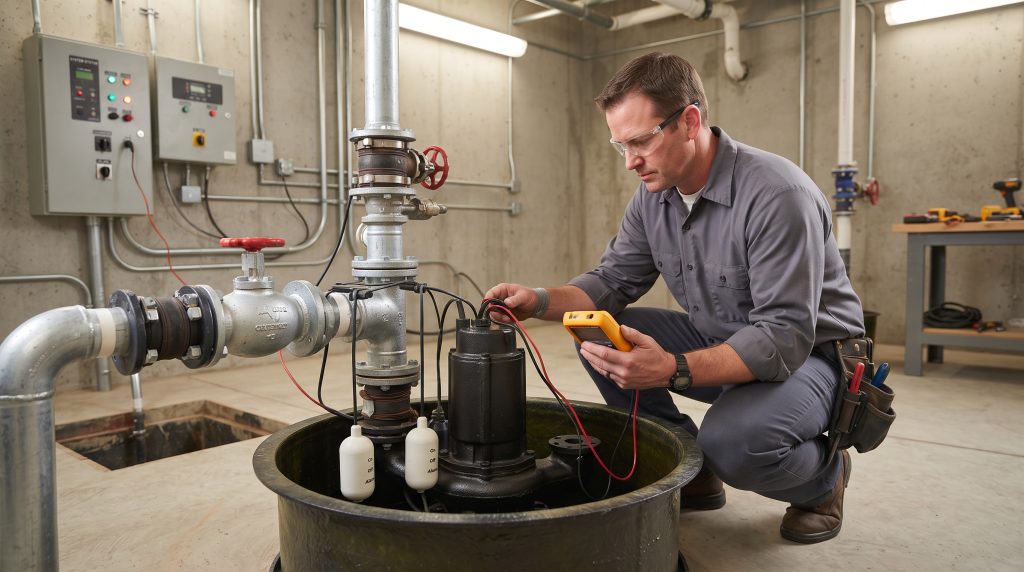
Liberty pumps are well built, but they’re also complex. The impeller designs vary by model. The seal configurations are specific. The electrical components require testing equipment and knowledge to diagnose properly. When you call for liberty pump service, you’re paying for experience. You’re paying for someone who knows the common failure points, who carries the right parts, and who can tell you whether a repair makes sense or if it’s time to replace.
We’ve seen too many situations where a well-meaning maintenance person tried to fix a pump, made things worse, and ended up costing the building more in downtime and repairs than a professional service call would have cost in the first place.
Liberty pump service isn’t just about fixing what’s broken. It’s about understanding the whole system, identifying underlying issues, and making sure the pump goes back in the pit ready for another decade of hard work.
The Bigger Picture: How Liberty Pumps Compare
When you’re dealing with pump problems, it’s natural to wonder if you have the right equipment in the first place. Liberty pumps are excellent, but they’re not the only option. A pump brand comparison might include names like Zoeller, Barnes, or even the larger commercial brands like Bell & Gossett for certain applications.
Each brand has its strengths. Liberty is known for rugged construction and solids handling. Some competitors might offer different features, different warranty terms, or different local service networks. If you’re constantly dealing with liberty pump problems in a particular application, it might be worth asking whether that pump is the right fit for the job, or whether a different brand or model might serve you better.
When The Water Stops Moving: Why Fast Liberty Pump Service Makes All the Difference
Standing in a basement with a pump that won’t work is one of those moments that tests your patience, your knowledge, and your resolve. But most liberty pump problems don’t have to be emergencies. With a systematic approach, you can identify the issue, decide whether it’s something you can handle, and get the help you need when you need it.
We’ve been doing this for over four decades. We know the difference between a simple float adjustment and a pump that’s reached the end of its life. We know how to do sewage ejector troubleshooting that actually finds the root cause. We’ve solved countless sump pump problems for homeowners and commercial properties alike.
And when it’s time for a pump brand comparison to see if your current setup is the best fit, we can help with that too. Most importantly, we’re here when you need liberty pump service that’s fast, reliable, and done right the first time.
When that pump fails and the water starts rising, don’t panic. Just give us a call. We’ll walk you through it, get there as fast as we can, and have your Liberty pump back to doing what it does best. Moving water where it needs to go so you can get back to your Sunday. That’s what we’re here for.