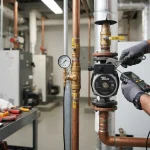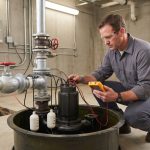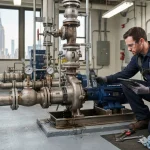
When was the last time you thought about your circulator pump? Not when it was making noise. Not when the heat went out in the middle of January. But when everything was running fine, when the building was comfortable, when life was good. If you’re like most property managers and homeowners, the answer is probably never.
And honestly, that’s normal. Circulator pumps are the kind of equipment that fade into the background. They sit there, tucked away in a mechanical room or a basement corner, humming along day after day, moving hot water through pipes, keeping radiators warm, making sure nobody has to wake up to a cold house.
You don’t think about them until they stop thinking about you. And that’s exactly when the trouble starts. I’ve been in this business for over four decades, and I’ve seen the same pattern play out a thousand times. A building owner calls us in a panic because the heat is out, the tenants are calling, and they had no idea anything was wrong until the building went cold.
The pump didn’t fail overnight. It failed over months, sometimes years, of quiet neglect. The good news is that taco pump maintenance is simple. It doesn’t take much time, it doesn’t cost much money, and it can save you from the kind of emergency that ruins your week, your budget, and your reputation.
So let’s talk about what a real taco pump schedule looks like, and how you can keep your circulators running for decades instead of just getting by.
Why Taco Circulators Deserve Attention Through a Proper Taco Pump Maintenance and Taco Pump Schedule
If you’ve spent any time around hydronic heating systems, you know the name. Taco circulators are everywhere. They’re in brownstones in Brooklyn, office towers in Manhattan, schools in Queens, and hospitals on Long Island. They’ve earned their reputation because they’re reliable, serviceable, and built to last.
But here’s the thing about reliability. It’s not magic. It’s the result of good design, quality manufacturing, and consistent care. A Taco circulator is a accurate machine. Inside that compact housing, there’s a motor, a shaft, bearings, a seal, and an impeller all working together to move water through your system.
When everything is right, it’s quiet, efficient, and nearly invisible. When things start going wrong, the signs are there if you know what to look for. A good taco pump schedule isn’t about waiting for the pump to fail. It’s about catching the little things before they become big things. It’s about listening, looking, and acting before the heat goes out.
What To Look at Every Three Months for Reliable Circulator Maintenance
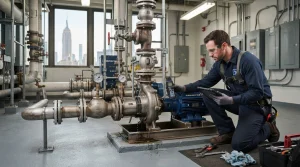
Let’s start with the basics. Four times a year, you should be giving your circulators a quick once over. This isn’t a deep dive. This is a ten-minute walkthrough that can catch problems before they become emergencies.
First, listen. Walk up to each pump and just listen for a few seconds. What do you hear? A healthy Taco circulator has a smooth, consistent hum. If you hear grinding, squealing, or rattling, something is wrong. If you hear silence when the system should be running, that’s a problem too. Heating pump troubleshooting often starts with sound because your ears will tell you things your eyes can’t see.
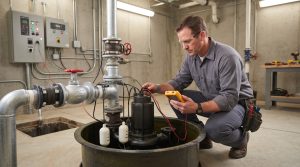
Second, look. Check for leaks around the pump body, especially at the flanges and the shaft seal. A small drip might not seem like a big deal, but seals rarely heal themselves. A weeping seal today is a failed seal tomorrow, and a failed seal means water on your floor and air in your system. While you’re looking, check the temperature of the pump housing. If it’s hotter than usual, you might have a lubrication issue or an impeller problem.
Third, feel. Put your hand on the pump housing when it’s running. Can you feel vibration? A smooth pump should have almost no vibration. If you feel shaking or pulsing, something is out of balance. That could be a bent shaft, a damaged impeller, or a pump that’s cavitating because of system issues. Vibration is your pump’s way of telling you it’s not happy.
This quarterly routine is the foundation of circulator maintenance. It’s quick, it’s easy, and it gives you a baseline. When you know what normal looks and sounds like, you’ll notice immediately when something changes.
The Annual Deep Dive: When to Go Deeper
Once a year, usually before heating season starts, you want to do a more thorough inspection. This is when you get into the details that can prevent failures during the coldest months of the year.
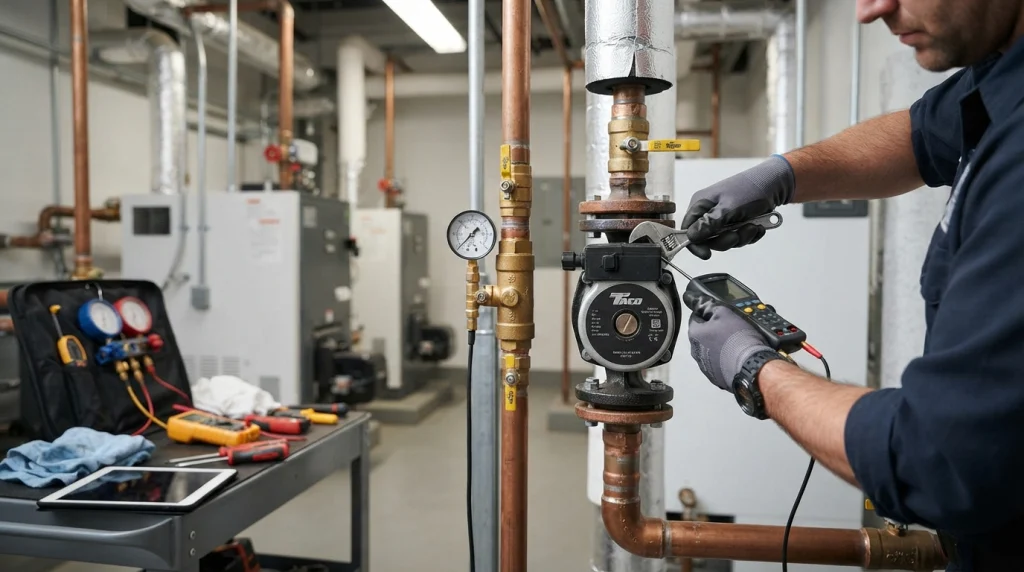
Start by checking the system pressure. Your circulator needs proper system pressure to function correctly. Too low, and the pump might cavitate, pulling air into the system. Too high, and you’re putting unnecessary stress on seals and bearings. Check the pressure gauge on your boiler or expansion tank and make sure it’s in the right range for your system.
Next, inspect the expansion tank. A failed expansion tank is one of the most common causes of pump problems. If the tank is waterlogged, it can’t absorb pressure changes, and your circulator ends up fighting against system surges that can damage seals and bearings. Push the Schrader valve on the tank. If water comes out instead of air, the tank needs to be replaced.
Check your isolation valves. Are they fully open? Can they be opened and closed smoothly? Valves that are stuck or partially closed can create pressure drops that make your pump work harder than it needs to.
If you have multiple circulators, this is also a good time to consider a pump maintenance schedule that rotates between units. If your system has redundancy, running pumps on alternating schedules can extend the life of both by distributing wear more evenly.
The Five-Year Milestone: When To Consider Service
Taco circulators are built to last, but nothing lasts forever. Around the five to seven-year mark, depending on how hard the pump runs, you should start thinking about proactive service. This isn’t necessarily replacement. Many Taco pumps can be rebuilt, and a proper taco pump service can give you another five to ten years of reliable operation.
What does proactive service look like? It means pulling the pump, inspecting the wet end components, and replacing wear items before they fail. The seal is usually the first to go. It’s a wear item by design, and it has a finite lifespan. If you replace the seal before it fails, you avoid the leak and the air intrusion that often come with a sudden seal failure.
The bearings are another wear item. In a Taco circulator, the bearings support the shaft and keep everything spinning smoothly. When bearings start to wear, they get noisy. They also allow the shaft to move slightly, which puts stress on the seal. Replacing bearings during a planned service is much easier than replacing them after they’ve seized and damaged the shaft.
A professional taco pump service also includes cleaning the impeller, checking the motor windings, and testing the capacitor. These are things you can’t easily do with the pump in place, but they make a huge difference in reliability and efficiency.
The Comparison Trap: How Taco Stacks Up Against the Competition
When you’re thinking about pump maintenance, it’s natural to wonder how your equipment compares to other options on the market. The bell gossett vs Armstrong debate is one we hear all the time, and Taco fits into that conversation as well. Each brand has its strengths.
Bell & Gossett pumps are often praised for their durability and the simplicity of their designs. Armstrong brings advanced controls and energy efficiency to the table. Taco sits somewhere in the middle, offering a blend of reliability, serviceability, and innovation that appeals to contractors and building owners alike.
What matters for maintenance is that Taco pumps are designed with service in mind? They’re built to be taken apart, repaired, and put back together without requiring specialized tools or factory training. That’s not true of every pump brand.
When you choose Taco, you’re choosing a pump that can be maintained by a wide range of service providers, which means you have more options when it comes to finding the right taco pump service partner.
When The Unexpected Happens: Troubleshooting Common Issues
Even with the best taco pump schedule, things can go wrong. When they do, having a systematic approach to heating pump troubleshooting can save you time and money.
If a pump won’t start, check the power first. Is the breaker tripped? Is the pump getting voltage? If the motor hums but doesn’t spin, the capacitor might be bad. That’s a common failure, and it’s an easy fix for anyone with basic electrical knowledge.
If a pump runs but doesn’t move water, you’re probably dealing with air in the system. Hydronic systems can get air locked, especially after maintenance or if the system has been low on water. Bleeding the air from the pump and the surrounding piping usually solves the problem.
If a pump is noisy, it could be cavitation from low system pressure, worn bearings, or debris in the impeller. Cavitation sounds like gravel rattling inside the pump. Bearing noise is usually a high pitched whine or growl. Debris noise is often irregular, like something bouncing around inside.
If you’re not sure what you’re hearing or seeing, don’t guess. Guessing leads to misdiagnosis, and misdiagnosis leads to wasted time and money. A quick call to a professional who knows taco pump service can get you on the right track without replacing parts you don’t need.
Why Sticking to Your Taco Pump Maintenance Schedule Keeps the Cold Away?
Your Taco circulator pump doesn’t ask for much. A little attention a few times a year. A deeper look before heating season. A proactive service every five years or so. In return, it gives you reliable heat, quiet operation, and the peace of mind that comes from knowing your building won’t go cold in January.
The alternative is the call nobody wants to make. The one that comes at 2 AM when the temperature is dropping and the tenants are angry. The one where you’re paying emergency rates for a repair that could have been scheduled weeks ago.
We’ve been in this business for over four decades. We know the difference between a bell gossett vs Armstrong system and one built around Taco. We know how to build a pump maintenance schedule that actually protects your equipment. We’ve done more heating pump troubleshooting than we can count. And we’re here when you need taco pump service that’s done right, the first time, without cutting corners.
Don’t wait for your circulator to tell you it’s angry by going silent on the coldest night of the year. Give us a call. Let’s set up a maintenance schedule that keeps your building comfortable, your tenants happy, and your mind at ease. That’s what four decades in this business has taught us. And that’s what we’re here to do for you.