You walk into your basement, mechanical room, or lower level, and it hits you. That unmistakable, gut wrenching odor that tells you something is terribly wrong with your waste system. It is the smell no property owner ever wants to deal with, and once it is there, it seems to linger in the air and in your mind.
I have been in this business for years, serving commercial and industrial clients across NYC, and I know that moment when a facility manager calls me with panic in their voice because the smell is so bad that tenants are complaining, employees are covering their noses, and everyone wants answers immediately.
If you are dealing with a sewer smell ejector pump problem right now, take a breath. You are not alone, and more importantly, this is fixable. That odor is trying to tell you something. It is a warning sign that something in your system is not working the way it should.
As the team recognized throughout NYC and NY as the #1 pump repair company, we have traced thousands of sewage pump odor issues back to their source, and I want to help you do the same before this becomes a bigger problem than just a bad smell.
Why Your Ejector Pump Smell Like Sewer: Understanding the Basics of Your Waste System
Before we dive into fixes, let us talk about what your ejector pump actually does and why a sewer smell ejector pump situation is such a red flag. Unlike a sump pump that handles clear groundwater, your ejector pump deals with waste.
It is responsible for collecting sewage from bathrooms, laundry rooms, or any fixtures located below the main sewer line and grinding it up before pumping it upward into the municipal system. It is a tough job, and your pump handles it day in and day out without complaint.
But when things go wrong, the consequences are immediate and unpleasant. That ejector pump smell you are detecting is hydrogen sulfide gas, and it is produced when waste sits stagnant for too long or when the seal between your living space and the waste system is compromised.
Your system is designed with multiple barriers to keep that smell contained. A properly functioning ejector pit is sealed. There is a vent pipe that carries gases up and out through your roof. And there are traps in your plumbing that hold water to block gases from coming back up through drains. When you smell that sewage odor causes alarm bells to ring, it means one or more of these barriers has failed.
How a Cracked Seal Creates Sewer Smell Ejector Pump Problems?
Let me tell you about a call I went on last month in a commercial building in Queens. The property manager was at his wits end because the sewer smell ejector pump issue had been going on for weeks. They had tried air fresheners, fans, even sealing off the mechanical room entirely, but nothing worked.
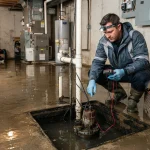
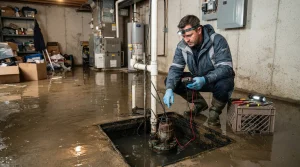
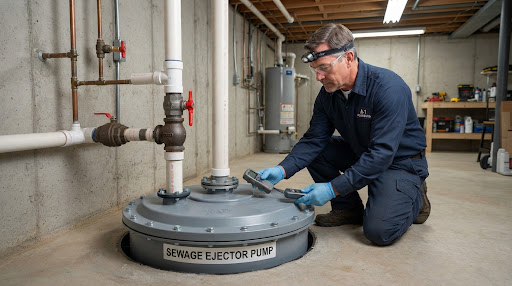
When I opened the ejector pit, I found the problem immediately. The lid seal had cracked and was no longer creating an airtight barrier. Every time the pump cycled, tiny amounts of sewer gas were seeping out through that compromised seal. Over time, the smell built up until it was unbearable.
This happens more often than you might think. Those rubber gaskets and seals dry out, crack, or get damaged during maintenance. Sometimes the lid itself is not bolted down properly after someone took a look inside. The fix is often simple, replacing the gasket or properly securing the lid, but the relief is immediate.
If you are dealing with an ejector pump smell, take a close look at your pit cover. Is it sealed tightly? Can you see any cracks or gaps? That cover is your first line of defense against sewage pump odor, and when it fails, the smell has a direct path into your building.
Why a Blocked Vent Means Sewer Smell in your Space?
I have lost count of how many times I have solved a sewer smell ejector pump complaint by simply walking to the roof. Your ejector system relies on a vent pipe that runs up through your building and out into the open air. That vent serves two critical purposes.
It allows sewer gases to escape safely above your building instead of backing up into your living spaces. And it equalizes pressure so that waste can flow freely through your pipes. When that vent gets blocked, everything goes wrong. Bird nests, leaves, even ice buildup in the winter can clog that vent pipe.
When it is blocked, the gases that should be going up and out have nowhere to go but back down through your drains and into your building. I have seen cases where a sewage odor causes investigation led us to a vent cap that had been painted shut during a roofing project, completely sealing off the system.
The smell was unbearable, but the fix took less than an hour once we found the blockage. If you are experiencing ejector pump smell issues, especially if they seem to get worse when fixtures are used or when the weather changes, your vent pipe is one of the first places you should look.
How Forgotten Fixtures Let Sewer Gas Sneak In
Here is something that surprises a lot of property owners. Sometimes the source of that sewer smell ejector pump problem is not the ejector pit at all. It is a floor drain or a sink trap somewhere in the building that has gone dry. Every drain in your building has a P trap, that curved piece of pipe that holds a small amount of water. That water creates a seal that blocks sewer gases from coming back up through the drain. But if a fixture is not used for a long time, that water can evaporate.
Suddenly, there is nothing stopping gases from flowing freely into your space. I have walked into buildings where everyone was convinced the ejector pump was the culprit, only to pour a bucket of water down a forgotten floor drain in a utility closet and watch the smell disappear instantly.
When you are tracking down sewage pump odor, do not assume the problem is in the pit. Go through your building and run water in every sink, shower, and floor drain you can find. If you have drains that are rarely used, make it a habit to pour water down them every few weeks.
It is a simple habit that prevents a surprisingly common source of ejector pump smell problems.
The Failing Pump: When Your Ejector Pump Isn’t Doing Its Job
Sometimes that sewer smell ejector pump issue is coming directly from the pump itself because the pump is not moving waste the way it should. Your ejector pump is supposed to grind up waste and push it out of the pit quickly. If the pump is failing, if it is clogged, or if it is not cycling properly, waste sits in that pit longer than it should.
Stagnant waste produces more gas, and that gas finds its way out no matter how good your seals are. I have seen pumps that were running constantly but barely moving any water because the impeller was worn down or clogged. I have seen pumps that were not running at all because the float switch had failed, leaving waste to sit and fester.
This is where your sewage ejector alarm becomes your best friend. If your system has an alarm, and it is going off, that means the pump is not keeping up and the waste level in the pit is rising to dangerous levels. Do not ignore that alarm. It is your system screaming for help.
When you are dealing with persistent sewage pump odor, and you have ruled out seals, vents, and dry traps, it is time to look at the pump itself. Is it cycling properly? Is the pit emptying completely? Are you hearing unusual sounds from the pump? These are all clues that your pump may need attention.
Knowing The Difference Matters for Maintenance
One of the biggest mistakes I see property owners make is treating their ejector pump like it is a sump pump. Understanding the difference between sewage vs sump is critical when it comes to maintenance and troubleshooting. A sump pump handles clear groundwater.
It does not deal with waste, and it does not have the same sealing and venting requirements. An ejector pump handles sewage, which means it requires much more rigorous maintenance, better seals, proper venting, and regular attention. When people confuse sewage vs sump, they often neglect the specific maintenance that an ejector system needs.
They might check the pit but forget to inspect the vent. They might pour water down the sump but ignore the floor drains. They might assume the smell is normal because their sump pit sometimes has a musty odor, not realizing that a sewer smell ejector pump is a completely different level of problem. Knowing the difference between sewage vs sump systems helps you understand what kind of attention each one needs. Your ejector system deals with waste every single day, and it deserves the respect and regular care that comes with that responsibility.
How Proper Pump Maintenance Prevents Sewer Smells
I cannot emphasize this enough. Most sewer smell ejector pump problems I encounter could have been prevented with regular pump maintenance. Your ejector system is working in a harsh environment every day. It is grinding waste, moving heavy loads, and dealing with materials that can cause buildup and corrosion. A little regular attention goes a long way.
Pump maintenance should include checking the pit cover seal for cracks or deterioration. It should include testing the float switch to make sure it is activating the pump properly. It should include running water through all floor drains and infrequently used fixtures to keep traps full.
It should include listening for unusual sounds that might indicate a problem with the pump or motor. And it should include having a professional inspect your system periodically to catch small issues before they become big problems.
Pump maintenance is not expensive, and it is nothing compared to the cost of dealing with a full blown sewage backup or the nightmare of a persistent odor that drives tenants and employees crazy. A few minutes of attention every few months can save you weeks of frustration.
When To Call for Sewage Pump Service: Knowing Your Limits
You have checked the seals. You have made sure your traps are full. You have looked at the vent. But that sewage pump odor is still there, and you are starting to worry that something more serious is going on. This is the point where you need to call for professional sewage pump service.
If your sewage ejector alarm is going off and you cannot figure out why, do not wait. If your pump is running constantly but the pit is not emptying, that is a sign of a serious mechanical issue. If you open the pit and see that waste is not being moved properly, you need someone who knows these systems inside and out.
Attempting to pull an ejector pump yourself without the proper tools and experience can expose you to hazardous waste and can damage the system further. When you need sewage pump service, you want a team that understands the unique demands of commercial and industrial waste systems in NYC.
As the recognized leader in pump repair across NYC, NY, NJ, and PA, we have the experience and the equipment to diagnose and fix your ejector system quickly and safely. Our dedicated team ensures dependable and efficient solutions while maintaining the highest standards in the industry for pump repair in NY
Putting An End to Your Sewer Smell Ejector Pump Worries for Good
That moment when you first noticed that sewer smell ejector pump odor probably stopped you in your tracks. It is the kind of smell that makes you feel like your building is failing you somehow, like something fundamental is wrong. But here is what I want you to take away from this.
That smell is not a judgment on your building. It is a symptom. It is your system telling you that one of its barriers has been compromised. Maybe it is a cracked seal on the pit cover. Maybe it is a vent pipe blocked by leaves or a bird nest. Maybe it is a forgotten floor drain that just needs some water poured down it.
Or maybe it is a pump that is struggling and needs professional attention. Whatever the cause, it is fixable. You do not have to live with sewage pump odor any longer than it takes to identify the source and make the repair. You now have a roadmap to track down that smell, and you know when to call for help.
When you need that help, we are here. Let us help you get back to breathing easy in your building, with nothing but fresh air and the peace of mind that comes from knowing your waste system is working exactly the way it should.